
Primary Chinese Reading and Writing
Reading comprehension, writing structure and introductory classical Chinese strengthen Chinese expression.
Ask on WhatsApp →Primary courses P1–P6
For P1–P6, we strengthen Chinese, English and maths foundations, practise test formats and prepare for internal assessments through level-appropriate exercises. In Whampoa Garden, Hung Hom, our small classes support children throughout primary school.
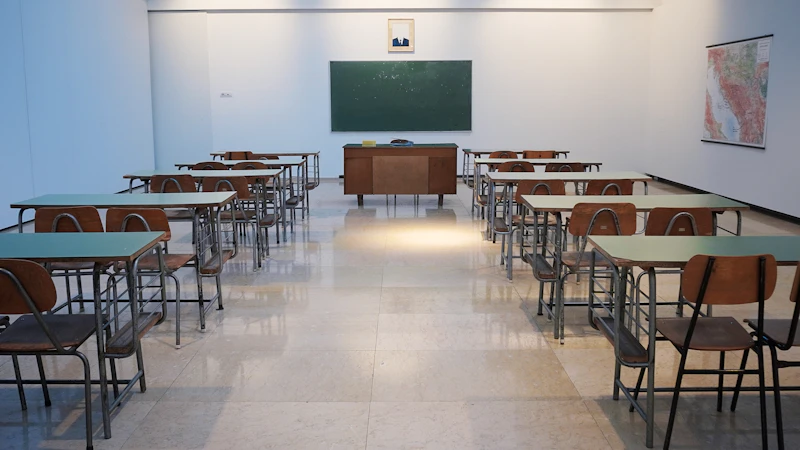
Lower primary focuses on concepts and learning habits. Upper primary adds time management, reading comprehension and multi-step problem-solving for practical internal-assessment preparation.
Primary school is crucial for developing learning methods. Uncorrected mistakes can accumulate until upper-primary assessments. We therefore fill gaps before tackling advanced work, with attention to correction and consistent revision.
Schedules change each term; ask on WhatsApp for the latest timetable. Please enquire directly about English and other subject arrangements.
Reading comprehension, writing structure and introductory classical Chinese strengthen Chinese expression.
Ask on WhatsApp →
Clarify concepts and practise question types to improve problem-solving and calculation accuracy.
Ask on WhatsApp →
Hands-on experiments combine with logical thinking to develop enquiry and cross-subject application.
Ask on WhatsApp →Understand what each course actually addresses in lessons.
When moving from kindergarten to primary school, priorities are adapting to dictation, homework and tests while establishing Chinese, English and maths foundations. From Early years courses students can continue the habits already developed.
Topics become deeper, reading passages longer and maths problems more numerous. This stage is a good time to identify and address accumulated gaps before upper primary.
Add time management, reading comprehension and multi-step problem-solving, alongside test formats, correction and revision habits, to prepare practically for internal assessments and then move on to Secondary courses 。
The information below is drawn from the Education Bureau's public information on Secondary School Places Allocation. For current arrangements, refer to Education Bureau website for the latest arrangements.
Participating primary schools submit students' The second term of P5 and both terms of P6 school results. These are standardised, then scaled using sampled average Pre-Secondary One Hong Kong Attainment Test results, with the adjusted results used to determine allocation bands.
The Education Bureau states that Pre-Secondary One Hong Kong Attainment Test results do not directly affect individual allocation. Schools and parents do not need to drill students for it.
Because all three sets of results count, upper-primary students need consistent test performance rather than last-minute cramming. Further reading: Parent seminar on internal-assessment strategies 。
Four steps, reflecting Inspire Education's Six teaching features 。
Book a free assessmentShort oral and written exercises help us understand ability, learning habits and school requirements.
Recommend classes, lesson frequency and initial learning priorities based on assessment.
Small-group explanations and structured materials address gaps before advanced work, with emphasis on correcting mistakes.
Regular assessments review progress, explain weaknesses and align next-stage goals with parents.
A shift from resistance to willingness to practise is often an early change in primary students receiving tutoring. For more feedback, visit Student progress ; for materials design, see A comprehensive upgrade to our new-term materials 。
The teacher is very patient. My child went from fearing English lessons to wanting to practise. Marks improved, but the return of confidence matters even more.
— Parent of a P5 student
My child used to resist maths, but after a few weeks was willing to practise independently. The teacher explains through everyday examples, which really suits my child!
— Parent of a P3 student
For more centre information, see About Inspire Education or directly Contact us 。
Under the Education Bureau's allocation system, participating primary schools submit results from the second term of P5 and both terms of P6. Results are standardised, then scaled using sampled average Pre-Secondary One Hong Kong Attainment Test results to determine allocation bands.
No. The Education Bureau states that these results are used to scale schools' internal assessment results, not to directly determine individual allocations. Schools and parents do not need to drill students for this test.
Primary courses include Chinese Reading and Writing, Maths Enrichment and STEM Science Exploration. We follow school topics, address gaps before advanced questions, and use graded practice for school tests and internal assessments.
Lower primary focuses on concepts and learning habits. Upper primary adds time management, reading comprehension and multi-step problem-solving for practical internal-assessment preparation.
We recommend booking Free learning assessment . Tutors explain strengths and weaknesses and recommend lesson frequency and starting topics.
The centre is at Shop G06, G/F, Phase 3, Whampoa Garden, Hung Hom, Kowloon. For summer transition arrangements, see Summer transition courses ; schedules change each term.
Tell us the student's year and target subjects to arrange a free assessment.